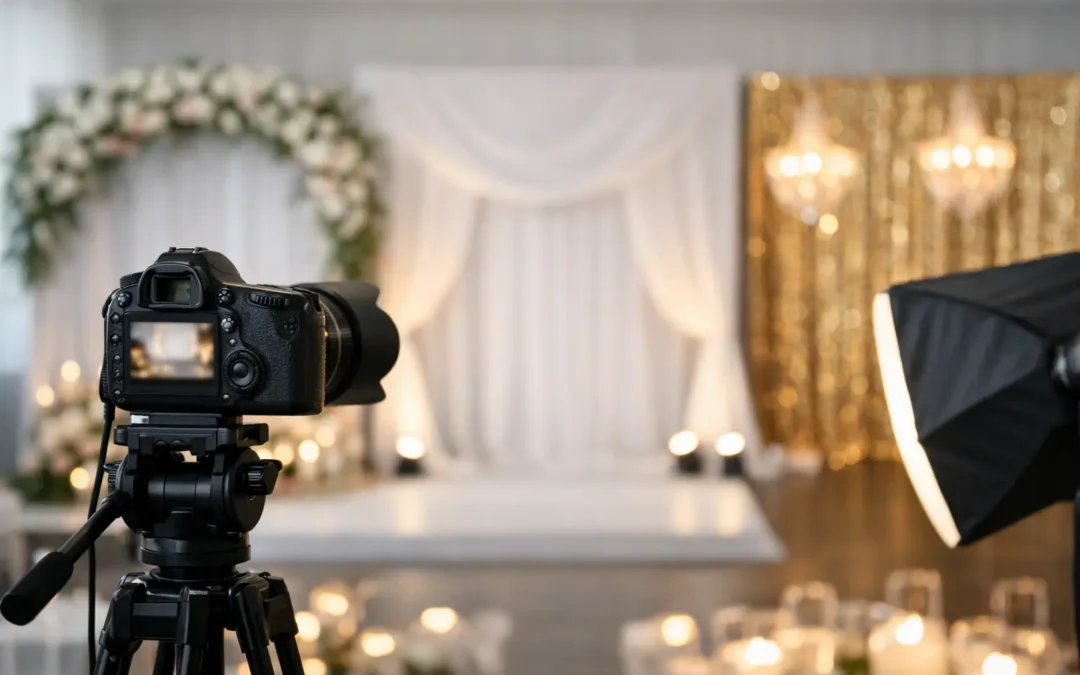
A backdrop is rarely just something behind the cake table or photo booth. It becomes the setting for the first family portrait, the bridal party’s favourite photo, the team’s social content, and the images guests keep long after the event. Knowing how to choose event backdrops means looking beyond colour alone and choosing a feature that works beautifully in the room, on camera and throughout the event flow.
For weddings, milestone celebrations and branded events, the right backdrop creates an immediate sense of occasion. The wrong one can make a carefully styled space feel crowded, flat or disconnected. A considered choice brings the room together while giving guests a reason to stop, pose and celebrate.
Start with the moment you want to create
Before choosing flowers, shimmer panels, fabric draping or a custom branded wall, decide what the backdrop needs to do. Is it intended to frame your ceremony, create a glamorous cake-cutting moment, welcome guests on arrival or anchor a photo experience? One event can certainly feature more than one backdrop, but each should have a clear role.
A ceremony backdrop needs to support the couple without taking attention away from them. A photo backdrop can be bolder, more textural and more playful because it is designed to draw guests in. For a corporate launch, the priority may be polished branding and a clear visual message, while a birthday celebration may call for colour, sparkle and a little theatre.
The atmosphere matters too. Soft florals and layered draping create romance and elegance. White panelling, plinths and refined signage suit a modern, editorial look. A shimmer wall or statement neon can lift the energy for an engagement, formal or dance-floor-adjacent photo moment. There is no single best style – the best choice is the one that feels at home in your celebration.
How to choose event backdrops for your venue
Your venue should guide the decision from the beginning. A backdrop that looks spectacular in a bright ballroom may disappear against a busy restaurant wall, while a large floral installation can feel extraordinary in a high-ceilinged reception space but overpower a smaller private room.
Consider scale before styling details
Ask for the dimensions of the wall or area where the backdrop will sit, including ceiling height. It is also worth checking whether there are power points, doors, fire exits, air-conditioning vents or fixed architectural features that affect placement. A backdrop needs enough visual presence to read in photographs without swallowing the space around it.
For a broad wall, a wider installation with layered panels, florals or draping can create a more intentional finish than a small feature placed in the middle. In a compact venue, a tailored backdrop with height and texture often delivers more impact than an overly wide design. Your guests also need room to gather in front of it without blocking service areas or walkways.
Natural light changes the result significantly. Daytime venues with large windows can make white florals, linen textures and soft neutral styling look luminous. Evening events may benefit from shimmer, LED neon, uplighting or reflective elements that retain their impact after dark. If the backdrop will appear in both daylight and evening photography, choose materials that perform well across both conditions.
Work with the room, not against it
Some venues already have character worth celebrating: heritage brick, harbour views, timber beams or contemporary feature walls. In these settings, the backdrop may be designed to complement the existing architecture rather than conceal it. A freestanding floral installation can frame a view, while light-up letters can add personality without covering the venue’s best feature.
Other rooms need more transformation. Blank walls, function spaces and trade show environments often benefit from a stronger focal point. Here, an elevated backdrop can set the tone the moment guests arrive and give the event a distinctive visual identity.
Choose a colour palette that holds up in photos
Your backdrop should connect with the wider event palette, but it does not need to match every detail exactly. A wedding with ivory blooms, champagne linen and warm candlelight may suit layered whites, soft beige and gentle foliage. A corporate event with strong brand colours may work better with a clean base, subtle branded accents and lighting that reinforces the campaign palette.
Contrast is essential. If the guest of honour or bridal party will be photographed in pale outfits, an entirely white backdrop can cause them to blend into the setting. Adding texture, foliage, metallic details or a soft tonal variation gives the image depth. Likewise, a dark backdrop behind dark formalwear may need lighter florals, signage or lighting to keep faces and outfits visible.
It is worth thinking about the photos guests will take on mobile phones as well as those captured by a professional photographer. Highly reflective surfaces can be striking, but direct flash and strong overhead lights may create glare. Matte panels, quality florals and fabric draping generally photograph beautifully, while shimmer walls work best when lighting is planned around them.
Let the event timeline shape the design
The most beautiful backdrop is less useful if it is positioned where it interrupts the flow of the day. Consider when guests will use it and what is happening nearby. A ceremony installation may later become the perfect couple-portrait setting, but only if it can remain in place without affecting the reception reset.
For a photo backdrop, choose a location guests can find easily without creating a bottleneck at the bar, entrance or dance floor. Placing it near a photo booth can create a complete entertainment zone, especially when paired with props, a guestbook station or custom signage. On the other hand, a formal media wall for a corporate event may need to sit close to registration so branded photographs are captured as guests arrive.
Ask whether the backdrop needs to work for one highlight moment or the entire event. A cake backdrop should remain visually clean even after guests have gathered around it. A photo wall should be durable enough for hundreds of poses, group shots and the occasional enthusiastic dance-floor return.
Balance statement styling with your budget
Backdrop budgets can vary widely because materials, scale, florals, custom signage, installation requirements and venue access all affect the final design. Rather than trying to include every possible feature, invest in the moments that will be most seen, photographed and remembered.
For a wedding, that may mean prioritising the ceremony or bridal-table backdrop and carrying complementary styling through to the cake display. For a birthday or engagement, a standout photo moment may deliver the greatest value because guests will interact with it all night. For corporate events, a polished branded backdrop can keep delivering value after the event through social posts, media imagery and internal content.
There are thoughtful ways to create impact without unnecessary excess. A structured panel backdrop can be elevated with selective florals rather than full coverage. Light-up letters can add scale and personality to a simpler setting. Dry ice for an entrance or first dance can create a spectacular visual contrast to a refined, understated backdrop. The strongest designs often combine one hero feature with carefully chosen supporting details.
Decide between custom, hired and hybrid backdrops
A hired backdrop is ideal when you want a professionally styled, reliable feature without the effort of sourcing and assembling individual elements. It suits weddings, private celebrations and corporate functions where the finish needs to be polished and installation needs to run smoothly.
Custom backdrops make sense when branding, names, campaign messaging or a unique theme is central to the event. Think branded media walls, personalised neon signs, monograms or custom florals designed around a distinctive palette. They offer a more tailored result, though they usually require earlier planning and a clearer approval process.
A hybrid approach is often the sweet spot. Begin with a premium hired structure or panel wall, then personalise it with signage, floral styling, balloons, lighting or branded elements. This creates a bespoke feel while keeping the design practical and focused.
Do not overlook installation and safety
Premium event styling should feel effortless to guests because the technical work has been handled properly behind the scenes. Confirm venue bump-in times, loading access, lift dimensions, parking arrangements and pack-down requirements before committing to a large installation. These details influence what is achievable and help prevent rushed set-ups on the day.
Freestanding backdrops need secure bases, especially in busy venues, outdoor settings or spaces where children may be playing nearby. Outdoor events also require a weather plan. Wind, uneven ground and changing light can affect both the backdrop and the photographs, so it is wise to have an indoor alternative or a design suited to the conditions.
An experienced styling team will consider the backdrop alongside the full event picture: florals, photo booths, special effects, signage, lighting and guest movement. At R&L Magical Moments, this joined-up approach helps create statement features that look exceptional while supporting a smooth, professionally managed celebration.
When choosing your backdrop, picture the people in front of it, not just the design on its own. The best one will make guests feel part of something special – then quietly turn those spontaneous smiles, embraces and celebrations into photographs worth keeping.